Your 1-Hour Glucose Test Came Back High. What It Actually Means.
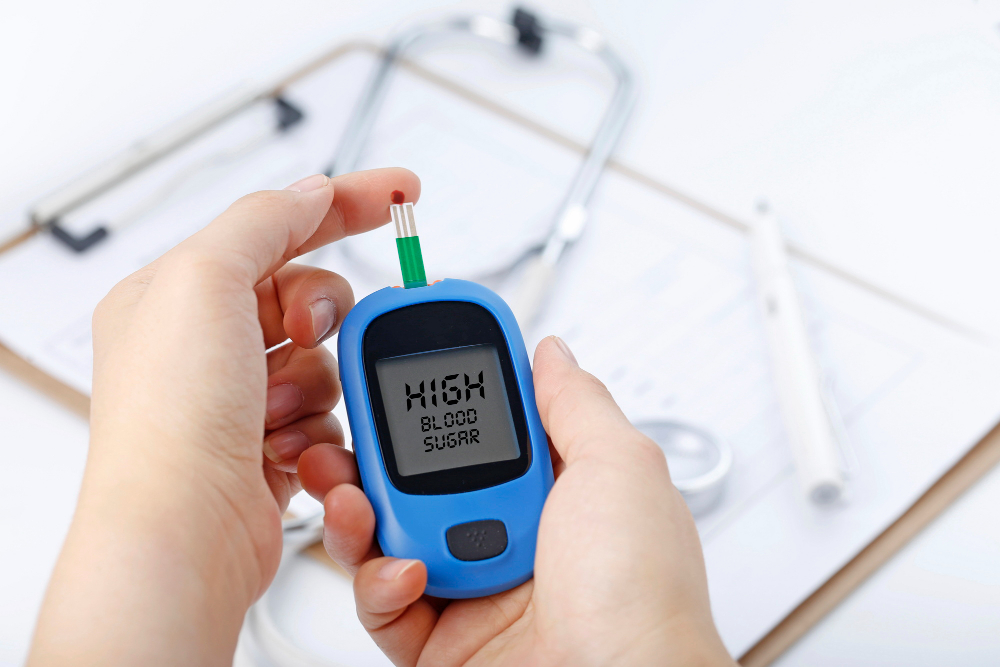
So your nurse called. Or you opened the patient portal before they did. And now you're staring at a number, maybe 145, maybe 160, maybe higher — with the word elevated next to it.
# Your 1-Hour Glucose Test Came Back High. What It Actually Means.
So your nurse called. Or you opened the patient portal before they did. And now you're staring at a number, maybe 145, maybe 160, maybe higher with the word *"elevated"* next to it.
Take a breath. You're not alone, and you're not in trouble yet.
This post is here to walk you through exactly what that number means, what your doctor is probably going to say next, and what the most recent research tells us about what actually helps. No scary language. No guesswork. Just what you need to know, from the research that's out there, in plain words.
🫱 Quick reassurance up front: About 2 out of 3 women who "fail" the 1-hour screening pass the longer follow-up test. Your one elevated number does not mean you have gestational diabetes. \~ *UF Health, NHS guidance*
---
What the 1-hour test actually is
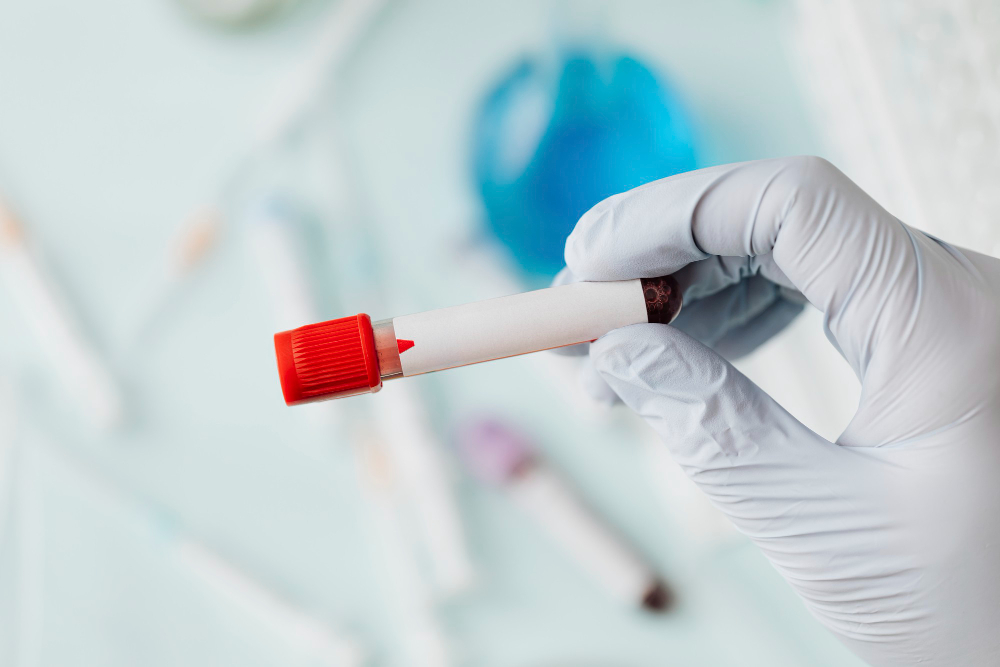
The 1-hour glucose test : Your doctor might call it the *glucose challenge test* or *glucose screening* isn't a diagnosis. It's a screen, which means it's designed to flag anyone who *might* have gestational diabetes so the doctor can take a closer look.
Here's how it works:
1. You drink a sugary liquid (about 50 grams of glucose — it tastes like flat orange soda) 2. You wait one hour 3. A nurse draws your blood and measures how much sugar is still in your bloodstream
If your pancreas is handling sugar normally, your blood sugar will have dropped back down by the hour mark. If it hasn't, that's a sign your body might be struggling a little with glucose during pregnancy and that's worth a closer look.
Most clinics do this between 24 and 28 weeks of pregnancy, because that's when pregnancy hormones are at their peak effect on blood sugar. Some doctors test earlier if you have certain risk factors we'll get to those in a minute.
---
What your number actually means
Different clinics use slightly different cut-offs, but most follow one of these ranges:
| Your 1-hour result | What it usually means | | :---- | :---- | | Under 140 mg/dL (7.8 mmol/L) | All clear. No follow-up needed. | | 140 – 179 mg/dL (7.8 – 9.9 mmol/L) | You'll be asked back for the 3-hour follow-up test | | 180 mg/dL (10.0 mmol/L) or above | Your doctor may diagnose gestational diabetes without a second test |
A few things worth knowing:
- Some clinics use 135 mg/dL as the cut-off instead of 140\. This doesn't mean that clinic is stricter or that you're in more trouble it means they're casting a wider net to catch borderline cases. - One elevated number is not a diagnosis. It's a signal to look more carefully. - Most women who get called back pass the longer test. The 1-hour is over-sensitive on purpose.
---
If you've been asked back for the 3-hour test
The 3-hour test is the one that actually diagnoses gestational diabetes. Here's what to expect:
- You fast overnight (8–14 hours, only water) - A nurse draws your blood first this is your fasting baseline - You drink a stronger sugar solution (100 grams) - You get your blood drawn 3 more times at 1, 2, and 3 hours after the drink
Your doctor will look at all four numbers together. According to current ACOG guidance, the expected ranges are:
| When | Expected below | | :---- | :---- | | Fasting | 95 mg/dL | | 1 hour after drink | 180 mg/dL | | 2 hours after drink | 155 mg/dL | | 3 hours after drink | 140 mg/dL |
Here's the part most blogs won't tell you plainly: if only one of these four numbers is above the cut-off, most doctors won't diagnose gestational diabetes. They'll usually ask you to adjust a few things in your diet and retest in a few weeks. Only when two or more numbers come back high do they make the diagnosis.
---
Who tends to get flagged more often
Doctors look at a few factors together when deciding how closely to watch your glucose during pregnancy:
- Age over 35 - Pre-pregnancy BMI over 25 - Family history of type 2 diabetes - A previous pregnancy with gestational diabetes - A previous baby born above 9 pounds (around 4 kg) - Ethnic background — women of South Asian, East Asian, Middle Eastern, African, or Hispanic heritage have been shown across multiple studies to have higher rates of gestational diabetes than women of European descent. This isn't something you did or caused — it's a pattern researchers see in population-level data, and it's part of why the screening test exists in the first place - A diagnosis of polycystic ovary syndrome (PCOS)
Having one or more of these doesn't mean you *will* be diagnosed. It just means the testing is doing its job by looking more closely.
---
What actually helps — according to the latest research
This is where most blogs stop giving you real information and start giving you vague "eat healthy" advice. Here's what recent research actually shows.
1\. What you eat matters more than how much
A major 2025 network meta-analysis published in *Frontiers in Endocrinology* reviewed 28 randomised controlled trials covering over 2,600 women with gestational diabetes. The strongest finding: diets based on low glycemic index (low-GI) foods consistently produced better fasting and post-meal glucose numbers than standard dietary advice.
In plain words: it's not about eating less, it's about eating foods that release sugar *slowly*.
Low-GI foods include:
- Whole oats, barley, quinoa (instead of white rice or white bread) - Lentils, beans, chickpeas - Most vegetables - Full-fat yogurt - Nuts and seeds - Fresh fruit with skin (not juice)
Foods that spike glucose fastest:
- White rice, white bread, sugary cereals - Fruit juice, soda, sweetened tea - Most packaged snacks and sweets - Fried potatoes, white pasta eaten alone
2\. Big meals hurt more than frequent small ones
The same meta-analysis found that spreading carbs across 3 smaller meals and 2 snacks produced better 2-hour post-meal glucose numbers than 3 large meals.
3\. Walking after meals is surprisingly powerful
A 2025 study in the Journal of Medical Internet Research followed pregnant women with GDM and found that a simple behavioural routine including a 15-minute walk after each meal — significantly lowered post-meal blood sugar and reduced the risk of having a larger-than-average baby.
A 15-minute walk. Not a gym session. Just a slow walk after you eat.
4\. Weight loss during pregnancy is *not* the answer
One of the most important recent findings: the DiGest randomised trial, published in *Nature Medicine* in 2025, tested whether reducing calories in pregnant women with GDM would improve outcomes. The answer was no — restricting calories didn't improve baby's birth weight or mom's long-term outcomes, and came with risks.
In plain words: the goal during pregnancy is stable blood sugar, not weight loss. You need full nutrition for your baby. If any clinician or influencer tells you to "just eat less" during pregnancy, that's not supported by the current research.
---
What to ask your doctor at your next visit
Bring these questions written down the appointment goes fast.
1. Can you walk me through what my number actually means for me, given my specific pregnancy? 2. If my 3-hour test is normal, are there any glucose patterns I should still watch for later in pregnancy? 3. If I'm diagnosed, will diet changes alone likely be enough, or will I need medication? 4. Are there any specific foods I should add or avoid right now, before the follow-up test? 5. Will this affect my delivery plan or my baby's care after birth? 6. Is there a dietitian I can be referred to, ideally one who understands my cultural foods?
---
A note on what this is not
This post is here to explain what the numbers on your lab report mean so you can walk into your next appointment prepared — not confused. It is not medical advice. Every pregnancy is different, and your doctor or midwife is the one who can see your full picture.
If you're worried, or if anything here raised a question, write it down and bring it with you. Being the patient who asks questions isn't being difficult — it's being a partner in your own care.
---
If you want your full report explained, we built a tool for this
LabInsightX reads your full blood report not just your glucose number and explains every single marker in plain English. It adjusts the normal ranges for your specific pregnancy trimester (because first, second, and third trimester normals are actually different), and gives you a personalised list of questions to ask your doctor at your next visit.
Free to try, no credit card. Just upload your report and see what it finds.
[Try LabInsightX free →](https://labinsightx.com)
---
Sources (so you can check our work)
1. Cleveland Clinic. "Oral Glucose Tolerance Test in Pregnancy." 2026\. [https://my.clevelandclinic.org/health/diagnostics/9696-glucose-test-pregnancy](https://my.clevelandclinic.org/health/diagnostics/9696-glucose-test-pregnancy) 2. UF Health. "Glucose Screening Tests During Pregnancy." 2024\. [https://ufhealth.org/conditions-and-treatments/glucose-screening-tests-during-pregnancy](https://ufhealth.org/conditions-and-treatments/glucose-screening-tests-during-pregnancy) 3. Mount Sinai Health Library. "Glucose screening tests during pregnancy." [https://www.mountsinai.org/health-library/tests/glucose-screening-tests-during-pregnancy](https://www.mountsinai.org/health-library/tests/glucose-screening-tests-during-pregnancy) 4. Kusinski LC et al. "Reduced-energy diet in women with gestational diabetes: the DiGest randomized clinical trial." *Nature Medicine*, Feb 2025\. [https://www.nature.com/articles/s41591-024-03356-1](https://www.nature.com/articles/s41591-024-03356-1) 5. Pan Y et al. "Effects of Cognitive Behavioral Therapy for Diet on Postprandial Glucose and Pregnancy Outcomes in Gestational Diabetes Mellitus." *Journal of Medical Internet Research*, 2025\. [https://www.jmir.org/2025/1/e71075](https://www.jmir.org/2025/1/e71075) 6. "Comparative efficacy of dietary interventions for glycemic control and pregnancy outcomes in gestational diabetes: a network meta-analysis of RCTs." *Frontiers in Endocrinology*, 2025\. [https://www.frontiersin.org/journals/endocrinology/articles/10.3389/fendo.2025.1512493/full](https://www.frontiersin.org/journals/endocrinology/articles/10.3389/fendo.2025.1512493/full) 7. Diabetes UK. "Gestational diabetes tests." [https://www.diabetes.org.uk/about-diabetes/gestational-diabetes/test](https://www.diabetes.org.uk/about-diabetes/gestational-diabetes/test)
Understand your lab results with AI
Upload your lab report and get a clear, personalized analysis in 60 seconds. First report is free.
Get My Free Analysis →